The Production Of Pullulanase With Different Agro Wastes As Substrate: Specification Checklist for Syrup Production
Compare pullulanase production routes, agro-waste substrates, and enzyme specifications for reliable syrup processing and supplier selection.
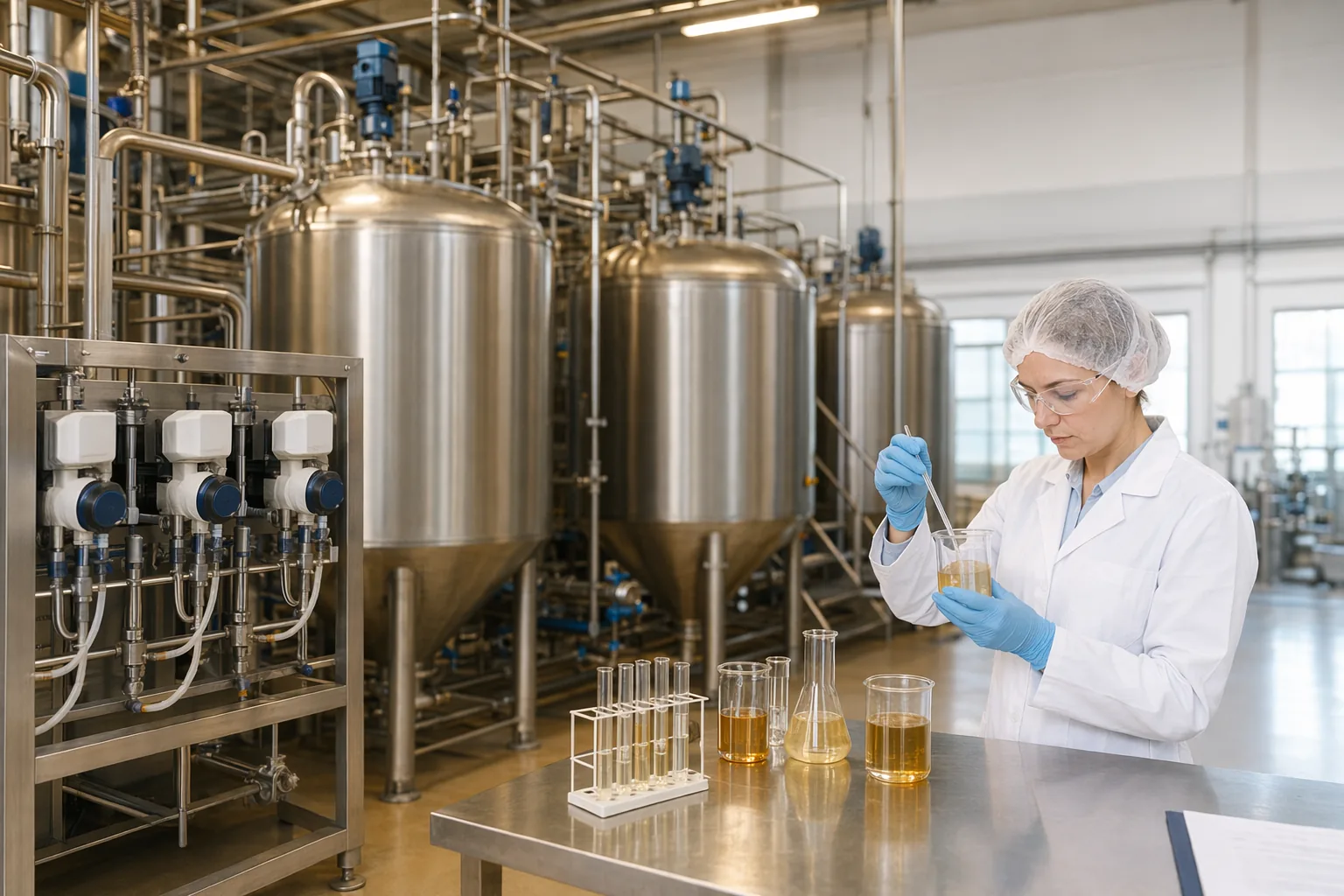
For syrup producers, pullulanase selection is not only about enzyme activity. It is about how the pullulanase is produced, documented, validated, and controlled in your liquefaction, saccharification, or debranching process.
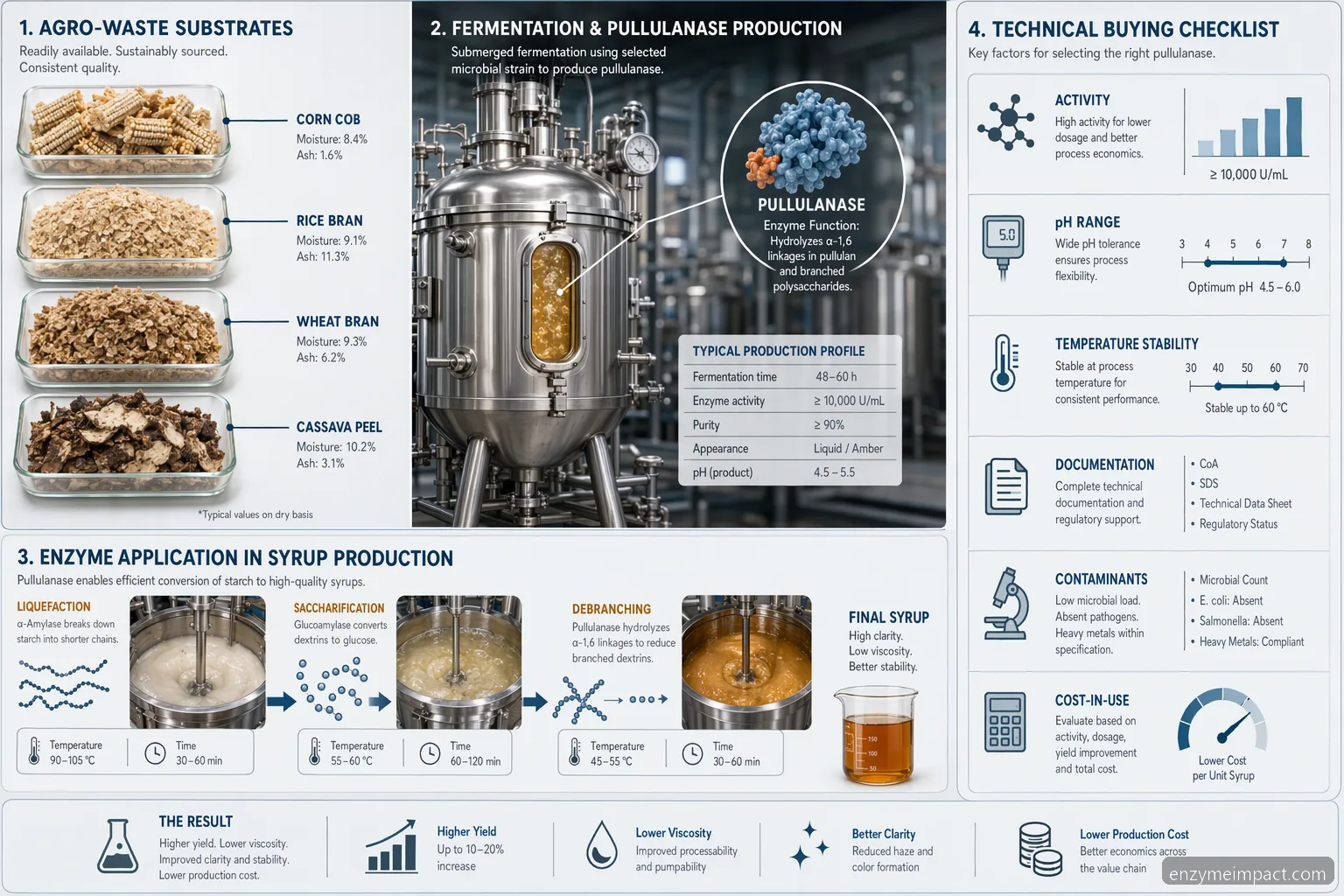
Why Agro-Waste Substrate Matters in Pullulanase Production
The production of pullulanase with different agro wastes as substrate is often discussed because substrates such as wheat bran, rice bran, corn steep liquor, cassava residues, soybean meal, and other starch- or protein-rich side streams can support microbial fermentation. For industrial buyers, the key question is not whether an agro-waste substrate was used, but whether the pullulanase supplier can show consistent enzyme performance from batch to batch. Substrate variation may affect fermentation yield, impurity profile, color, odor, side activities, and downstream clarification needs. A practical comparison should include the producing microorganism, fermentation mode, activity assay, carrier system, and purification or concentration steps. In syrup production, these factors influence dosing confidence and process repeatability. Buyers should treat agro-waste substrate information as one part of supplier qualification, alongside specification limits, QC release data, and pilot-scale performance under real plant conditions.
Ask whether substrate sourcing and pretreatment are controlled. • Compare activity using the same assay basis whenever possible. • Check whether side activities affect starch hydrolysis profiles.
Performance Requirements for Syrup Production
Pullulanase is a starch debranching enzyme that hydrolyzes alpha-1,6 linkages in amylopectin and related branched dextrins. In syrup production, it is commonly evaluated with glucoamylase or beta-amylase to improve saccharification efficiency and increase target sugar yield. Typical evaluation conditions may include pH 4.0 to 5.5, temperature ranges from 50 to 65 degrees Celsius, and reaction times aligned with the plant saccharification hold. Some products tolerate higher or lower ranges, so buyers should verify the TDS against their actual process. Dosage often falls in a trial band rather than a fixed universal rate, such as 0.05 to 0.40 kg enzyme preparation per metric ton of dry starch, depending on activity strength, substrate quality, and target syrup specification. A pullulanase enzyme for syrup production should be selected by measurable output: dextrose equivalent, glucose or maltose profile, residual dextrin, viscosity, and filtration behavior.
Validate at real dry solids, not only diluted lab starch. • Track sugar profile by HPLC or equivalent method. • Confirm compatibility with glucoamylase, alpha-amylase, and process aids.
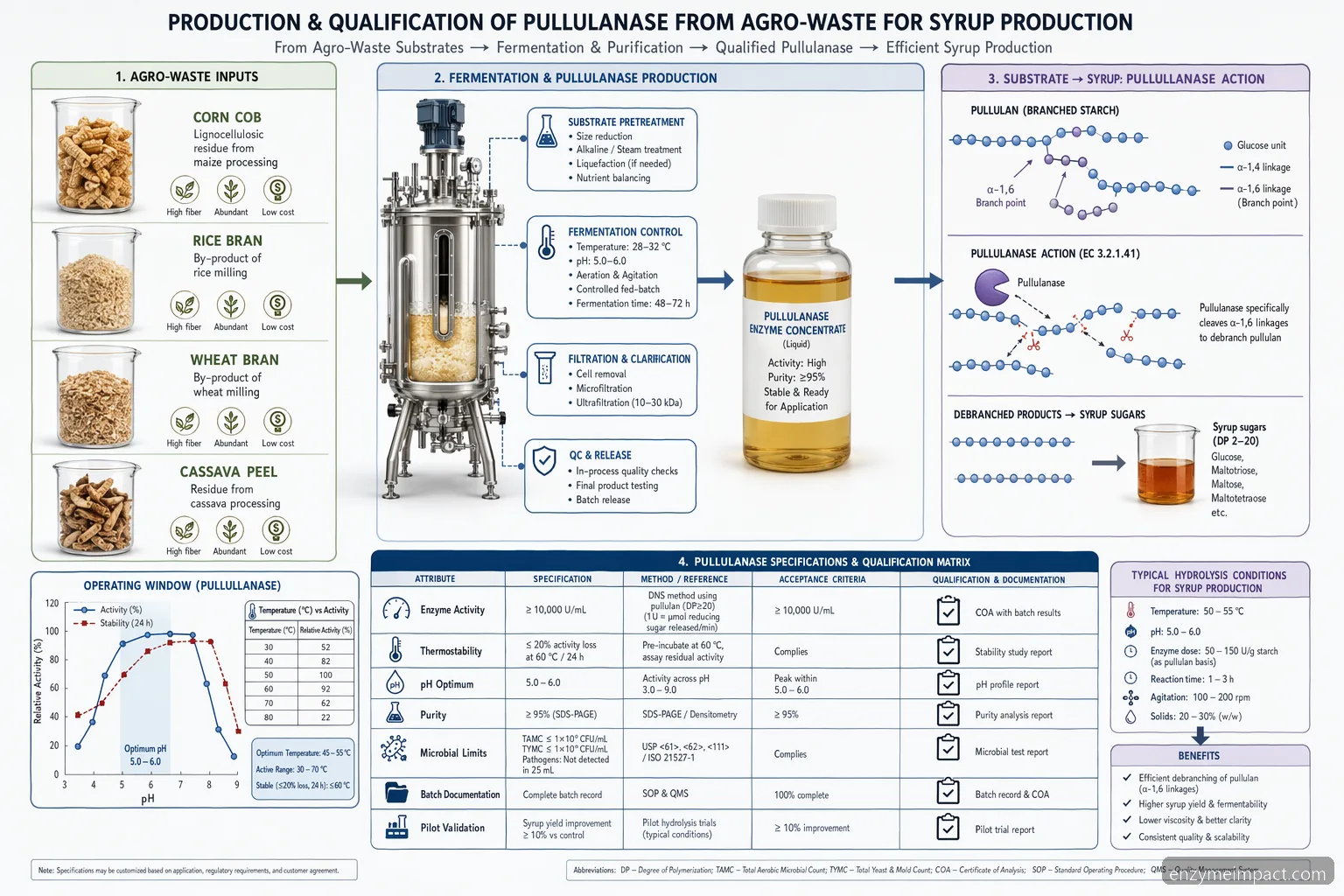
How to Compare Pullulanase Suppliers
A pullulanase supplier for syrup production should provide more than a quoted activity number. Request a current COA for the offered batch, a TDS with recommended pH and temperature range, an SDS for handling and storage, and a clear description of the activity assay. If two suppliers use different activity definitions, direct unit-to-unit comparison can be misleading. Ask for retention samples, batch history, microbiological limits where relevant, heavy metal or contaminant statements when applicable to your market, and shelf-life data under recommended storage. For liquid enzymes, confirm preservative system, viscosity, and pumpability. For powders, check dusting risk, particle size, carrier, and dissolution behavior. Supplier qualification should also assess responsiveness, change notification practice, packaging integrity, and technical support for plant trials. A reliable pullulanase enzyme supplier for syrup production will support cost-in-use modeling rather than pushing dosage by brochure claims.
Require COA, TDS, and SDS before plant evaluation. • Ask how formulation changes are communicated. • Compare delivered activity, not only price per kilogram.
Pilot Validation Before Full-Scale Adoption
Pilot validation turns a specification sheet into operating evidence. Start by selecting a baseline syrup process and running side-by-side tests with the candidate industrial pullulanase syrup production enzyme at two or three dosage points. Keep liquefied starch DE, pH, temperature, dry solids, calcium level if relevant, and saccharification time consistent across trials. Monitor sugar profile, residual oligosaccharides, iodine response where useful, viscosity drop, filtration rate, color development, and downstream evaporation behavior. A typical pilot may run at pH 4.2 to 5.2 and 55 to 62 degrees Celsius, but the correct range depends on your process and the product TDS. Include an enzyme blank or current supplier control to estimate true incremental benefit. If the trial shows higher yield but creates filtration or color issues, cost-in-use may not improve. Document the conditions carefully so plant scale-up is based on repeatable evidence.
Use your actual liquefied starch or process intermediate. • Run at least one current-supplier control. • Calculate enzyme cost per ton of syrup solids.
Cost-in-Use and Procurement Checklist
For industrial pullulanase enzyme syrup production, procurement should compare total processing value rather than purchase price alone. Cost-in-use includes enzyme dosage, delivered activity, storage losses, handling time, yield improvement, reduced saccharification time, filtration effects, energy impact, and rework reduction. A concentrated enzyme with a higher invoice price may be economical if it lowers dosage and improves sugar profile stability. Conversely, a low-cost product may become expensive if activity drifts or requires higher usage. Before approval, align purchasing, QA, production, and technical teams on acceptance criteria. Define minimum activity, acceptable pH and temperature performance, packaging size, shelf life, delivery lead time, batch documentation, and change notification expectations. For syrup plants comparing pullulanase production options, supplier transparency is essential. The best decision combines production-route understanding, release testing, pilot data, and a commercial agreement that protects continuity of supply.
Model cost per ton of dry starch processed. • Include yield, filtration, and downtime impacts. • Set written acceptance criteria before first order.
Technical Buying Checklist
Buyer Questions
Not automatically. Agro-waste substrates can be attractive fermentation inputs, but syrup producers should judge the finished pullulanase by activity consistency, impurity control, documentation, and plant performance. Different agro wastes may affect fermentation yield and downstream processing. Ask the supplier how substrate variability is controlled and compare pilot results under your own saccharification conditions before changing supply.
At minimum, request a COA for the supplied batch, a TDS with pH, temperature, dosage, storage, and application guidance, plus an SDS for handling. For supplier qualification, also ask for assay method details, shelf-life information, batch consistency data, packaging specifications, and a change notification process. These documents help QA and production teams assess risk before plant trials.
Dosage depends on enzyme activity, starch source, dry solids, liquefaction quality, target sugar profile, pH, temperature, and saccharification time. A practical starting evaluation may test several dosage points, such as a low, medium, and high level within the supplier’s recommended range. The final decision should use cost-in-use, not dosage alone, because yield and filtration effects matter.
Yes, pullulanase is often evaluated with glucoamylase because debranching can improve access to alpha-1,4 linkages and help increase glucose yield. Compatibility should still be confirmed. Run trials at the same pH, temperature, dry solids, and residence time used in production, and measure glucose, residual dextrin, DE, viscosity, and filtration behavior to confirm benefit.
A suitable supplier can provide consistent batches, clear technical documentation, realistic dosage guidance, and support for pilot validation. They should understand starch processing conditions and help compare cost-in-use, not only price per kilogram. Look for transparent activity methods, reliable delivery, packaging options that fit your plant, and a defined process for communicating formulation or manufacturing changes.
Related Search Themes
pullulanase supplier for syrup production, pullulanase production, pullulanase for syrup production, pullulanase enzyme supplier for syrup production, pullulanase enzyme for syrup production, industrial pullulanase syrup production
Pullulanase (Debranching Enzyme) for Research & Industry
Need Pullulanase (Debranching Enzyme) for your lab or production process?
ISO 9001 certified · Food-grade & research-grade · Ships to 80+ countries
Frequently Asked Questions
Is agro-waste substrate production always better for pullulanase?
Not automatically. Agro-waste substrates can be attractive fermentation inputs, but syrup producers should judge the finished pullulanase by activity consistency, impurity control, documentation, and plant performance. Different agro wastes may affect fermentation yield and downstream processing. Ask the supplier how substrate variability is controlled and compare pilot results under your own saccharification conditions before changing supply.
What documents should a pullulanase supplier provide?
At minimum, request a COA for the supplied batch, a TDS with pH, temperature, dosage, storage, and application guidance, plus an SDS for handling. For supplier qualification, also ask for assay method details, shelf-life information, batch consistency data, packaging specifications, and a change notification process. These documents help QA and production teams assess risk before plant trials.
How is pullulanase dosage determined for syrup production?
Dosage depends on enzyme activity, starch source, dry solids, liquefaction quality, target sugar profile, pH, temperature, and saccharification time. A practical starting evaluation may test several dosage points, such as a low, medium, and high level within the supplier’s recommended range. The final decision should use cost-in-use, not dosage alone, because yield and filtration effects matter.
Can pullulanase be used with glucoamylase in glucose syrup?
Yes, pullulanase is often evaluated with glucoamylase because debranching can improve access to alpha-1,4 linkages and help increase glucose yield. Compatibility should still be confirmed. Run trials at the same pH, temperature, dry solids, and residence time used in production, and measure glucose, residual dextrin, DE, viscosity, and filtration behavior to confirm benefit.
What makes a pullulanase enzyme supplier suitable for syrup production?
A suitable supplier can provide consistent batches, clear technical documentation, realistic dosage guidance, and support for pilot validation. They should understand starch processing conditions and help compare cost-in-use, not only price per kilogram. Look for transparent activity methods, reliable delivery, packaging options that fit your plant, and a defined process for communicating formulation or manufacturing changes.
Related: Pullulanase for Measurable Process Gains
Turn This Guide Into a Supplier Brief Request a pullulanase specification review and pilot trial plan for your syrup production line. See our application page for Pullulanase for Measurable Process Gains at /applications/pullulanase-debranching-enzyme/ for specs, MOQ, and a free 50 g sample.
Contact Us to Contribute