Biosynthetic Pathway for Pullulanase and Starch Degradation
Buyer guide to pullulanase for starch processing: pathway basics, debranching conditions, QC, dosage, COA/TDS/SDS, pilot validation, and supplier checks.
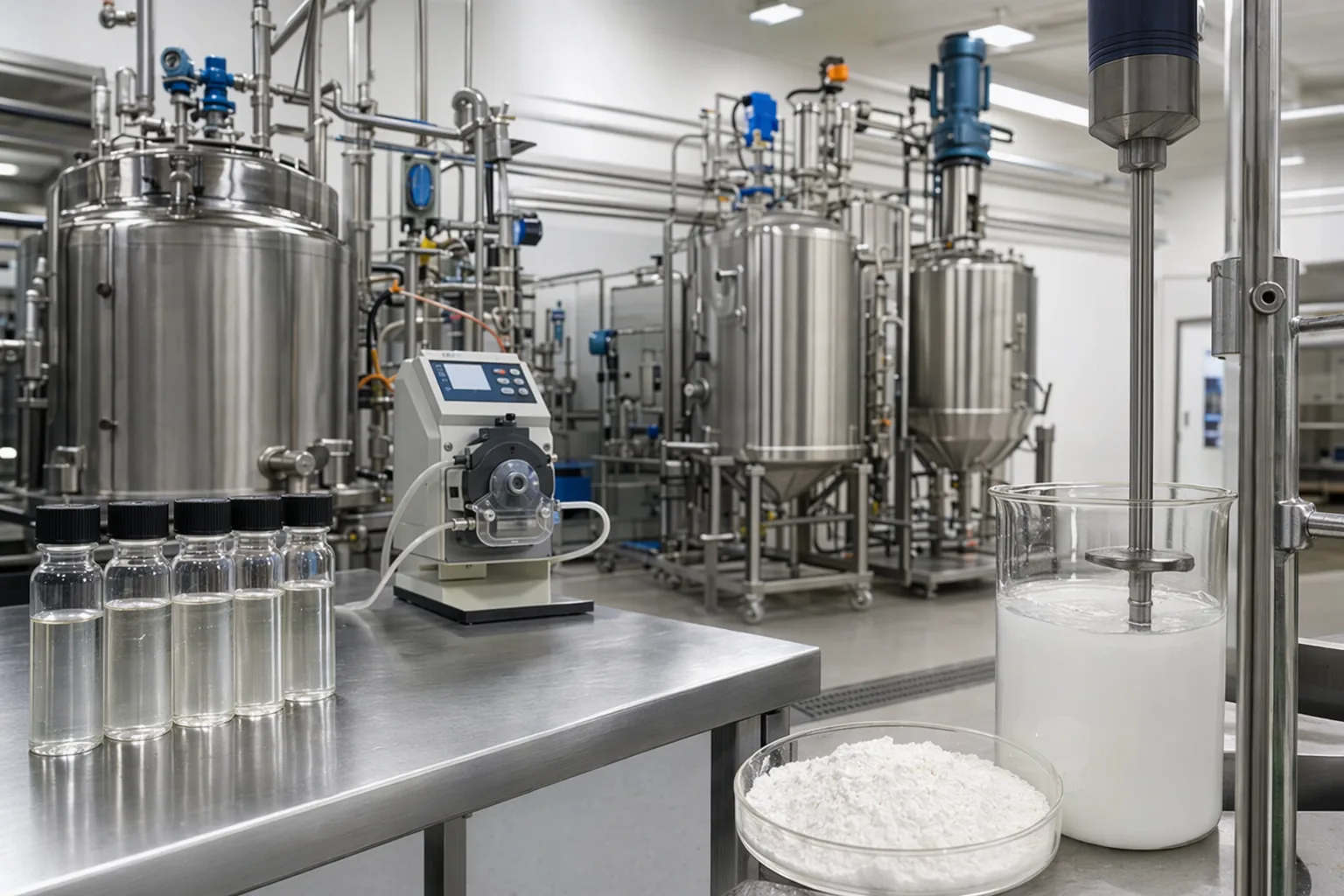
A practical B2B guide for starch processors evaluating pullulanase enzyme suppliers, process fit, debranching performance, documentation, and cost-in-use.
Why starch processors evaluate pullulanase
For industrial starch processing, pullulanase is used when alpha-1,6 branch points limit conversion, filtration, fermentability, or syrup profile control. Liquefaction and saccharification systems based only on alpha-amylase and glucoamylase can leave branched limit dextrins that slow conversion and affect final carbohydrate distribution. Pullulanase enzyme for starch processing targets those branches, opening the substrate so companion enzymes can work more efficiently. This is relevant in glucose syrup, maltose syrup, high-DE syrup, brewing adjunct conversion, and processes where lower residual dextrin is valuable. A buyer should not select only on quoted price per kilogram. The more important comparison is cost-in-use: enzyme activity delivered, dosage required, process time saved, yield improvement, reduced rework, and fit with existing pH and temperature windows. A qualified pullulanase supplier for starch processing should support lab trials, pilot validation, documentation review, and scale-up troubleshooting.
Best fit: starch processing, brewing, and syrup production. • Primary function: starch debranching through alpha-1,6 bond hydrolysis. • Commercial value: improved conversion, profile control, and process efficiency.
Biosynthetic pathway for pullulanase production
Industrial pullulanase is typically produced by selected microbial fermentation rather than extracted from starch crops. In production organisms, carbon sources are metabolized through central pathways that supply energy, amino acids, and precursors for enzyme biosynthesis. The pullulanase gene is transcribed to messenger RNA, translated into a protein, folded, and then secreted or released depending on the production strain and process design. Fermentation parameters such as carbon source, nitrogen source, pH, aeration, temperature, induction strategy, and harvest timing influence enzyme titer and impurity profile. After fermentation, the broth is clarified, concentrated, stabilized, and formulated as a liquid or dry enzyme preparation. For buyers, the key point is not the exact proprietary strain route, but whether the pullulanase enzyme supplier for starch processing can provide consistent activity, lot-to-lot stability, clean downstream handling, and clear documentation of the activity assay used on the COA.
Common production route: controlled microbial fermentation. • Critical outputs: activity, stability, purity profile, and batch consistency. • Buyer check: request the stated activity method, not only activity units.
How pullulanase supports starch degradation
Starch degradation involves reducing granular or liquefied starch into smaller carbohydrates through a sequence of hydrolysis steps. Alpha-amylase primarily attacks alpha-1,4 linkages to reduce viscosity and create dextrins. Glucoamylase hydrolyzes glucose units from non-reducing ends, but alpha-1,6 branch points slow its progress. Pullulanase, as a debranching enzyme, cleaves those alpha-1,6 linkages in pullulan, amylopectin, and branched limit dextrins, increasing the number of linear chains available for further hydrolysis. In syrup production, this can shift the DP profile and help achieve targeted glucose or maltose levels. In brewing, pullulanase can improve fermentable extract when used under mash-compatible conditions. The effect of pullulanase on gel strength of starch depends on substrate, degree of debranching, retrogradation behavior, and process design; therefore, processors making modified starch or texture-driven products should test gel strength, viscosity, and setback rather than assuming one universal outcome.
Pullulanase hydrolyzes alpha-1,6 branch points. • Debranching improves access for glucoamylase or beta-amylase. • DP profile and viscosity should be verified by process-specific testing.
Practical process conditions and dosage ranges
Commercial pullulanase for starch processing is usually evaluated under saccharification or mash conditions, not extreme liquefaction temperatures unless the grade is designed for high heat. Start from the grade’s stated window (for this grade, pH 4.0–5.5 and 55–65°C) and confirm it against your glucoamylase or mash program. Dosage must be based on declared enzyme activity and substrate load, starting from the supplier’s recommended dose and followed by optimization. Higher dry solids, short residence time, low substrate accessibility, or strict DP targets may require adjustment. Avoid dosing by volume alone unless density and activity are controlled. Confirm whether the supplier’s activity units are comparable before benchmarking competing products.
Trial pH and temperature: the grade’s stated window, measured at process temperature. • Screening dosage: the supplier’s recommended dose, then optimize.
QC checks for pilot validation
A reliable pilot plan should connect enzyme dose to measurable process outcomes. At minimum, record substrate type, dry solids, liquefaction DE, pH profile, temperature profile, hold time, enzyme addition point, agitation, and any companion enzymes. Analytical checks may include DE, glucose, maltose, maltotriose, DP4+ dextrins, residual pullulanase activity where relevant, viscosity, iodine reaction, filtration rate, turbidity, color, ash, and microbial status. For syrup production, HPLC carbohydrate profiling is more useful than a single DE value when the target is a defined sugar spectrum. For brewing, measure extract, fermentability, wort viscosity, and attenuation impact. When evaluating industrial pullulanase enzyme starch processing performance, include a no-pullulanase control and at least two dosage levels. This helps distinguish true debranching benefit from normal variation in liquefaction, saccharification time, or raw material quality.
Use a control batch without pullulanase. • Measure DP profile, not only DE. • Track process conditions and companion enzyme additions.
Supplier qualification and documentation
A suitable pullulanase enzyme supplier for starch processing should provide technical documentation before commercial purchase. Request a current TDS for activity, appearance, recommended pH and temperature, dosage guidance, storage, packaging, and shelf life. Request an SDS for handling, PPE, spill response, and transport classification. The COA should show lot number, manufacturing or release date, activity result, specification limits, and relevant quality checks. Depending on plant requirements, buyers may also request allergen information, GMO status statement where applicable, food-use suitability statement, heavy metal limits, microbial limits, and country-of-origin details. Avoid assuming that two products with the same enzyme name have the same activity, stability, or regulatory fit. Supplier qualification should also review production capacity, lead time, batch traceability, change notification practices, sample availability, and technical response time during pilot and scale-up.
Required documents: COA, TDS, and SDS. • Confirm activity units and assay conditions. • Assess lead time, traceability, and change notification support.
Cost-in-use and scale-up decision factors
The lowest price per kilogram is not always the lowest operating cost. Cost-in-use should calculate enzyme cost per metric ton of dry starch processed and compare it with yield, cycle time, energy demand, filtration performance, downstream losses, and product specification consistency. A more concentrated pullulanase may cost more per kilogram but require less material handling, lower storage volume, and lower freight cost. Conversely, an inexpensive enzyme may underperform if its activity declines in the plant’s pH, temperature, or hold-time conditions. For scale-up, confirm addition point, dilution water quality, pump compatibility, mixing time, and exposure to sanitizers or high shear. Run a plant trial only after lab and pilot data show a robust operating window. A strong industrial pullulanase starch processing supplier will help interpret trial results and recommend practical optimization rather than promoting maximum dose as the default answer.
Compare cost per metric ton of dry starch, not only price per kilogram. • Include yield, time, filtration, and quality in the economics. • Validate storage stability and dosing accuracy before full conversion.
Technical Buying Checklist
Ask for the activity method behind the value on the COA, not only the units • Confirm the production route is controlled microbial fermentation with stated lot release checks • Trial at the grade’s window (pH 4.0–5.5, 55–65 °C) with a no-pullulanase control • Measure the DP profile, not only DE • Compare cost per tonne of dry starch
Pullulanase (Debranching Enzyme) for Research & Industry
Need Pullulanase (Debranching Enzyme) for your lab or production process?
ISO 9001 certified · Food-grade & research-grade · Ships to 80+ countries
Frequently Asked Questions
What does pullulanase do in starch processing?
Pullulanase hydrolyzes alpha-1,6 branch points in amylopectin and branched dextrins. This debranching improves access for enzymes such as glucoamylase or beta-amylase, helping processors reach target sugar profiles more efficiently. In syrup plants, it may reduce residual dextrin and improve conversion control. The exact benefit depends on starch source, liquefaction quality, pH, temperature, residence time, and companion enzyme system.
How should I compare pullulanase suppliers?
Compare suppliers by cost-in-use, not just unit price. Review activity units, assay conditions, recommended pH and temperature, dosage guidance, COA consistency, SDS, TDS, shelf life, storage requirements, lead time, and technical support. Ask for a pilot sample and run side-by-side trials using the same substrate, dry solids, pH, temperature, and hold time so performance differences are measurable.
What dosage of pullulanase should a starch plant start with?
Start from the supplier’s recommended dose, adjusted to the declared activity and the process target. Trials should include a no-pullulanase control and at least two dosage levels. Optimize against DE, HPLC sugar profile, viscosity, filtration, residence time, and total enzyme cost.
Can pullulanase change starch gel strength?
Yes, debranching can influence gel strength, viscosity, retrogradation, and texture, but the direction and magnitude depend on starch source, amylose and amylopectin ratio, degree of debranching, solids level, heating profile, and cooling conditions. For modified starch or texture-sensitive products, processors should measure gel strength, setback, viscosity curve, and final product performance during pilot validation.
What documents should I request before buying industrial pullulanase?
Request a technical data sheet, certificate of analysis, and safety data sheet for the exact product and lot. The COA should list activity and specification limits, while the TDS should define use conditions, storage, shelf life, and dosage guidance. Depending on your market, also request food-use suitability information, allergen statement where relevant, microbial limits, and traceability details.
Turn This Guide Into a Supplier Brief
Request pullulanase samples, COA/TDS/SDS review, and pilot support for your starch process. See our application page for Pullulanase for Measurable Process Gains for specs, MOQ, and a free 50 g sample.
Contact Us to Contributehello@mail.enzymeimpact.com