Starch Saccharification Troubleshooting: Pullulanase Trials, pH, Temperature and Addition Point
For starch and syrup plants where saccharification stalls: how to set up a pullulanase trial, check pH and temperature, add it at the right point and judge the result by sugar profile and cost-in-use.
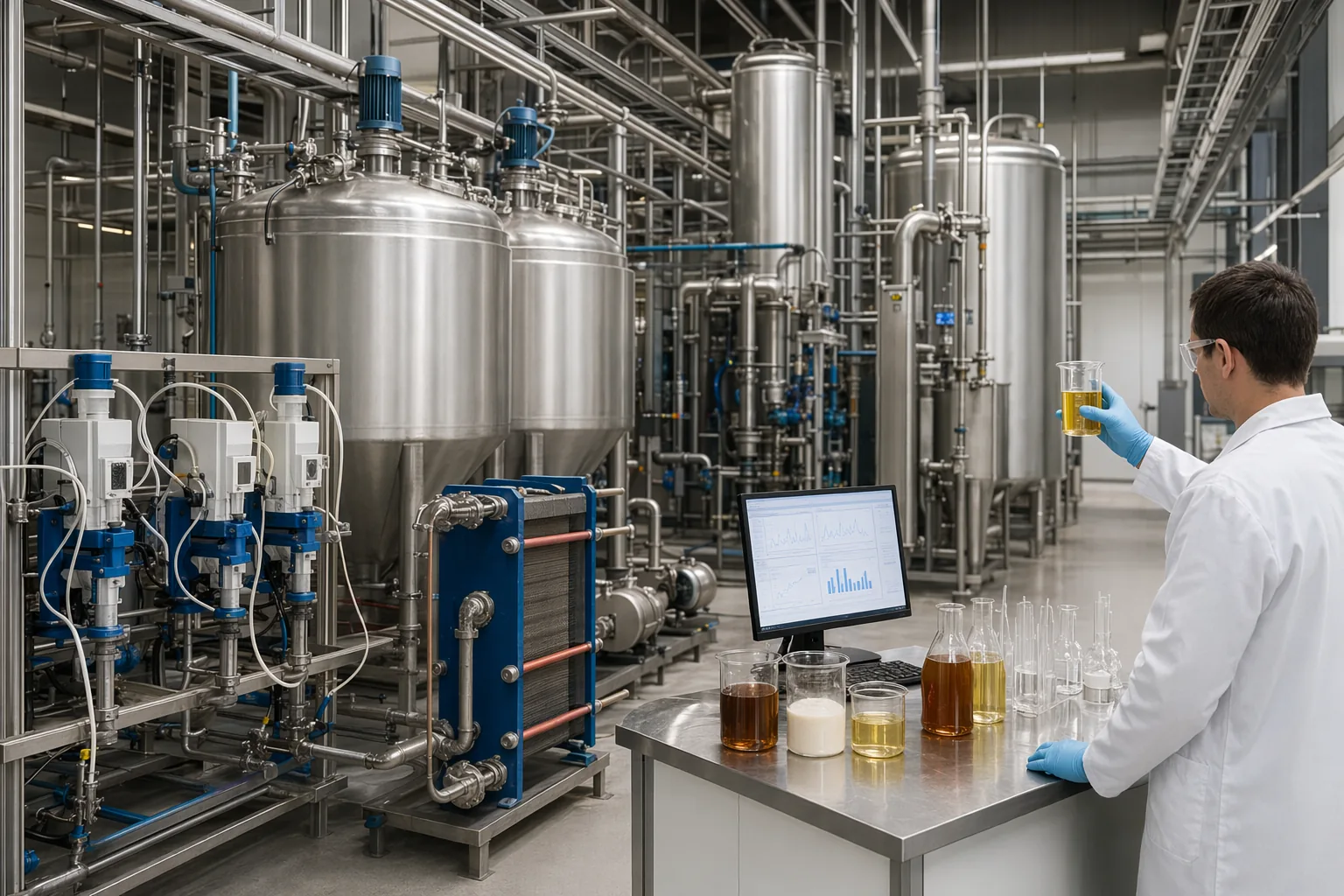
When a saccharification line leaves too much residual dextrin, misses its DE or maltose target or runs slow, branched starch is often the cause. This guide is for starch, syrup and brewing-adjunct processors deciding whether a debranching step fixes the problem, how to trial it, and what to send for a quote.
Why Pullulanase Is Used in Starch Processing
Pullulanase is a debranching enzyme used in starch processing to hydrolyze alpha-1,6 linkages in amylopectin and limit dextrins. In practical terms, it opens branched starch structures so saccharifying enzymes can work more completely. This is valuable in glucose syrup, high-maltose syrup, brewing adjunct conversion, and other processes where residual branched dextrins reduce yield or alter product profile. For buyers troubleshooting low DE, poor maltose formation, slow saccharification, high residual dextrin, filtration issues, or inconsistent syrup specification, pullulanase can be a targeted process lever. It is not a stand-alone fix for poor liquefaction, incorrect calcium control, microbial contamination, or unstable pH. The best results usually come from reviewing the full enzyme system, including alpha-amylase liquefaction, saccharification enzyme choice, solids level, holding time, and final QC targets.
Primary role: starch debranching • Common partners: glucoamylase, beta-amylase, fungal alpha-amylase • Typical targets: DE, maltose, DP profile, viscosity, filtration rate
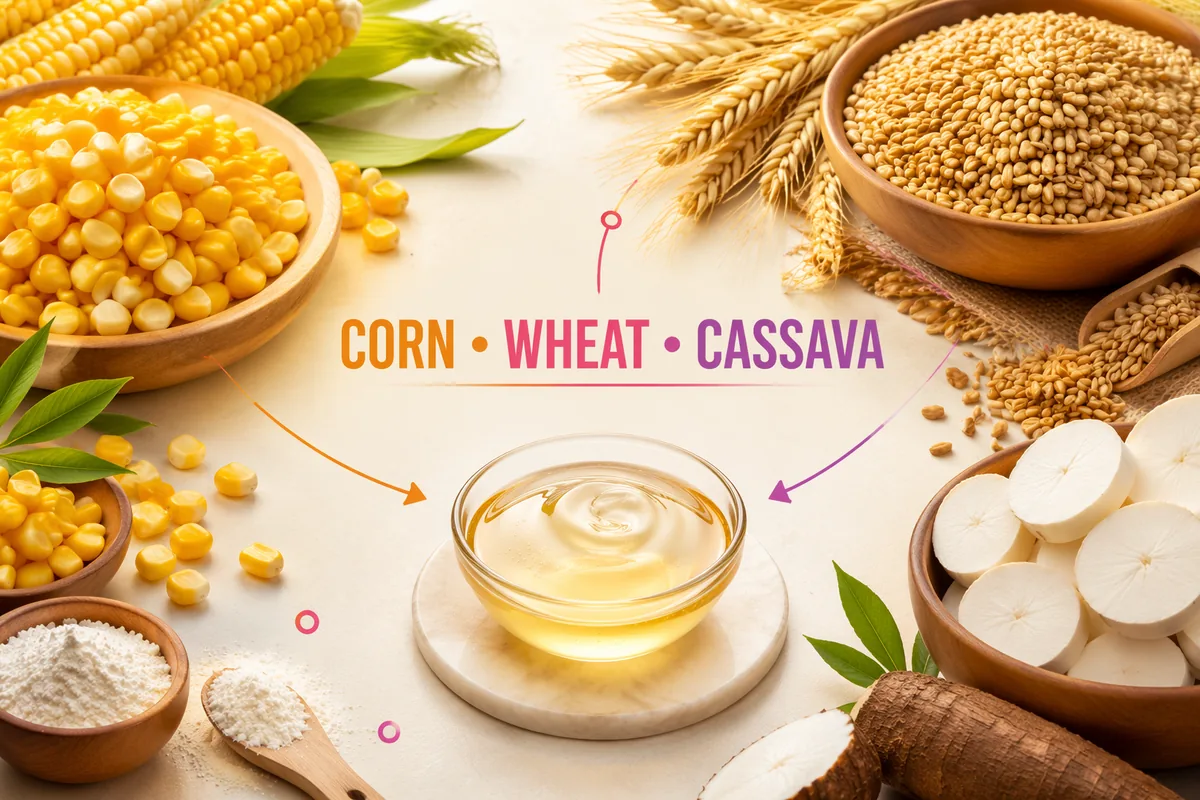
Where to Add Pullulanase in Starch Processing
Industrial pullulanase enzyme starch processing usually begins after starch slurry liquefaction. A typical process uses alpha-amylase to liquefy starch at high temperature, then cools and adjusts pH before saccharification. Pullulanase is commonly added during saccharification with glucoamylase for glucose syrup or with beta-amylase and other amylolytic enzymes for maltose-rich syrup. The best addition point depends on substrate viscosity, liquefaction quality, enzyme compatibility, and residence time. If pullulanase is added too early, thermal or pH stress may reduce effective activity. If added too late, the enzyme may not have enough contact time with branched dextrins to influence the final carbohydrate profile. Process trials should compare single-point dosing, staged dosing, and combined enzyme dosing to determine the most economical approach. Formulators should also confirm whether preservatives, antifoams, salts, or cleaning chemical residues interfere with enzyme performance.
Add after liquefaction for most syrup processes • Avoid high-temperature exposure outside the enzyme TDS range • Validate compatibility with companion enzymes • Check pH adjustment accuracy before enzyme dosing
Pullulanase Dosage: Start With a Pilot Range
There is no universal pullulanase dosage for starch processing because commercial products are sold at different activity strengths and measured in supplier-specific units. A practical trial often compares a low, medium, and high dose using the supplier’s recommended range, commonly expressed per metric ton of dry starch or per gram of dry substance. Start from the supplier’s recommended range and confirm it on your own substrate rather than copying a figure from another plant: the correct dosage depends on enzyme activity, substrate, process time, and target sugar profile. Run the trial at plant-relevant dry solids, not only in dilute lab slurry. Evaluate cost-in-use by improvement in conversion, reduced saccharification time, higher fermentable extract, lower residual dextrin, or fewer off-spec batches. If response plateaus, additional enzyme may only increase cost.
Request activity definition and assay method on the TDS or COA • Compare enzyme cost per ton of dry starch processed • Measure performance at the actual plant residence time • Confirm whether dosage is recommended before or during saccharification
pH and Temperature Windows for Troubleshooting
Most pullulanase enzyme for starch processing is used under mildly acidic saccharification conditions. Many industrial products operate around pH 4.0–5.5 and 55–65°C, while some thermostable grades tolerate higher temperatures for specific process designs. Always follow the product TDS because enzyme source, formulation, and stability profile vary. If conversion is weak, check whether the pH was measured at process temperature and whether buffer capacity changed after liquefaction, acid adjustment, or neutralization. Temperature excursions can also reduce activity: low temperature slows reaction rate, while excessive heat may inactivate the enzyme before debranching is complete. For combined enzyme systems, optimize to the overlap between pullulanase stability and the partner enzyme’s activity. A small shift in pH or temperature can change DP distribution, maltose yield, glucose formation, and residual branched dextrin.
Typical trial pH: 4.0–5.5 • Typical trial temperature: 55–65°C • Verify stability time, not only peak activity • Check pH meter calibration and temperature compensation
Troubleshooting Low Conversion or Unstable Results
If pullulanase for starch processing is not delivering the expected conversion, first confirm the enzyme was added at the correct process point. Pullulanase is normally more useful when liquefied starch has been cooled into the saccharification window and pH has been adjusted appropriately. Adding it into a jet-cooking or high-temperature hold step can cause rapid activity loss unless the product is specifically designed for that exposure. Next, check liquefaction quality: poor gelatinization, excessive retrogradation, high viscosity, or incomplete alpha-amylase action can limit debranching efficiency. Also review residence time, dry solids, agitation, and sample timing. A small pH deviation can matter if the process runs near the edge of the enzyme’s activity curve. Finally, confirm storage conditions and shelf life, because heat-damaged or aged enzyme may still look normal but underperform in production.
Check actual slurry pH at process temperature • Verify enzyme addition point and hold time • Compare fresh enzyme with retained production samples • Measure residual dextrins or DP distribution when possible
QC Checks That Show Whether Debranching Worked
A pullulanase trial should be judged by measurable process outcomes, not by appearance alone. For syrup production, track DE, glucose, maltose, maltotriose, higher saccharides, viscosity, filtration behavior, color, and final solids. HPLC carbohydrate profiling is especially useful because pullulanase changes the distribution of linear and branched dextrins. In brewing or adjunct conversion, monitor fermentable extract, limit dextrin, iodine reaction, wort viscosity, filtration speed, and attenuation impact. For starch modification projects, the effect of pullulanase on gel strength of starch can be positive or negative depending on debranching degree, amylose-like chain formation, retrogradation, solids, and cooling history. Therefore, gel strength should be measured under the buyer’s final product conditions. Keep a retained control batch so the enzyme effect is separated from raw material variation.
Use HPLC or equivalent DP profiling where possible • Track residual starch or iodine response • Compare viscosity and filtration against an untreated control • Test gel strength under final formulation and cooling conditions
Supplier Qualification and Cost-in-Use
Choosing a pullulanase supplier for starch processing should involve more than requesting the lowest price per kilogram. Ask for a current COA for each batch, a TDS with activity definition and operating conditions, and an SDS for handling and storage. Confirm recommended storage temperature, shelf life, packaging, allergen or processing-aid declarations if relevant to your market, and whether the product is suitable for the intended food processing use. A qualified pullulanase enzyme supplier for starch processing should support pilot validation, provide troubleshooting input, and explain how their activity unit relates to dosage. Cost-in-use should include enzyme dosage, conversion gain, batch time, energy use, yield, filtration performance, off-spec reduction, and inventory risk. Before plant adoption, run a documented pilot or production trial with agreed acceptance criteria.
Request COA, TDS, and SDS before purchasing • Check batch-to-batch activity consistency • Confirm lead time, storage, packaging, and technical support • Use pilot data to calculate total cost-in-use
Technical Buying Checklist
Before a plant trial on a stalled saccharification line:
Confirm slurry pH at process temperature and the tank temperature against the grade’s window (pH 4.0–5.5, 55–65 °C) • Add after liquefaction and cooling, not into jet cooking or a high-temperature hold • Run an untreated control plus low, medium and high doses at plant dry solids and residence time • Take time-course samples so slow kinetics and enzyme loss can be told apart • Judge the result by DE, HPLC sugar profile, residual dextrin and cost per tonne of dry starch
Request a Quote
We supply pullulanase to starch and syrup manufacturers, brewers, distributors and resellers. The grade is a brown liquid at 1,000–3,000 ASPU/g, packed in 25 kg drums or 200 L drums, minimum order 25 kg; price and lead time are quoted per order.
Send the product, the quantity and the destination country, plus your substrate, dry solids and current enzyme program so the quote matches your process.
Pullulanase (Debranching Enzyme) for Research & Industry
Need Pullulanase (Debranching Enzyme) for your lab or production process?
ISO 9001 certified · Food-grade & research-grade · Ships to 80+ countries
Frequently Asked Questions
What does pullulanase do in starch processing?
Pullulanase acts as an industrial debranching enzyme. It hydrolyzes alpha-1,6 branch points in amylopectin and related limit dextrins, making starch fragments more accessible to enzymes such as glucoamylase or beta-amylase. In starch processing, this can improve saccharification efficiency, shift the sugar profile, reduce residual branched dextrins, and support more consistent syrup or brewing performance when process conditions are properly controlled.
What pH is best for pullulanase for starch processing?
Many pullulanase products used in starch processing perform in a mildly acidic range, commonly around pH 4.0–5.5. The best pH depends on the enzyme source, formulation, temperature, residence time, and partner enzymes. Always use the supplier TDS as the starting point, then validate under plant conditions. Also confirm pH measurement accuracy, because hot starch liquors and high solids can cause misleading readings.
What temperature should be used for industrial pullulanase starch processing?
A common trial window for industrial pullulanase starch processing is about 55–65°C, although specific products can differ. Lower temperatures may slow debranching, while excessive heat can reduce enzyme stability before the reaction is complete. If pullulanase is used with glucoamylase, beta-amylase, or fungal alpha-amylase, the selected temperature should balance the activity and stability of the complete enzyme system.
How do I calculate the right pullulanase dosage?
Start with the supplier’s recommended range and run a structured dose-response trial at actual dry solids, pH, temperature, and residence time. Compare untreated control, low dose, medium dose, and high dose. Measure DE, sugar profile, viscosity, filtration, and final specification. The right dosage is the point where performance and cost-in-use are optimized, not necessarily the highest enzyme addition rate.
What should I ask a pullulanase enzyme supplier for starch processing?
Ask for a COA, TDS, SDS, activity definition, assay method, recommended dosage range, operating pH and temperature, storage conditions, shelf life, and packaging options. For food processing applications, request relevant suitability and regulatory-use information for your market. A strong supplier should also support pilot validation, help interpret process data, and provide consistent batch quality and reliable delivery timelines.
Why did pullulanase not improve glucose yield in my trial?
Common causes include addition at the wrong process step, excessive temperature exposure, pH outside the active range, insufficient saccharification time, poor liquefaction quality, inaccurate dosing, or degraded enzyme from improper storage. Review time-course samples, pH and temperature logs, dry solids, enzyme lot data, and dosing pump calibration before increasing dosage.
Can pullulanase be used with glucoamylase or beta-amylase?
Yes. Pullulanase is commonly paired with glucoamylase for glucose syrup production and with beta-amylase or fungal amylase systems for maltose-rich syrups. The key is compatibility: the enzymes must share workable pH and temperature conditions, and the process must allow sufficient residence time. Trials should compare companion enzyme ratios because debranching can shift the carbohydrate profile and conversion rate.
Turn This Guide Into a Supplier Brief
Contact Enzyme Impact to discuss pullulanase selection, pilot validation, and cost-in-use for your starch processing line. See our application page for Pullulanase for Measurable Process Gains for specs, MOQ, and a free 50 g sample.
Contact Us to Contributehello@mail.enzymeimpact.com