Pullulanase Food Processing: Pullulanase Dosage, pH, and Temperature in Starch Processing
Troubleshoot pullulanase in starch processing with practical dosage, pH, temperature, QC, cost-in-use, and supplier qualification guidance.
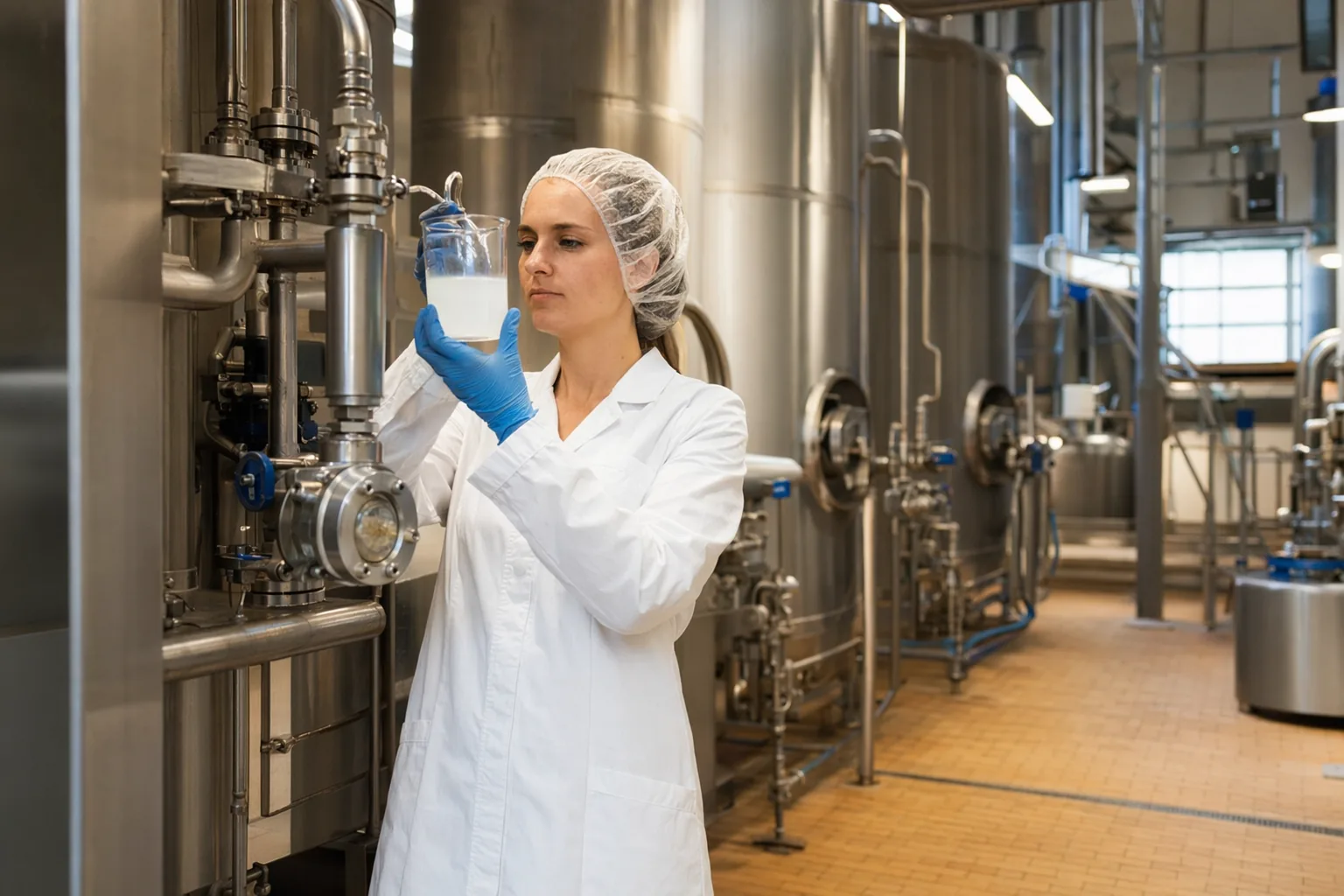
For starch processors, pullulanase is a debranching enzyme used to improve saccharification efficiency, manage glucose yield, and support consistent syrup profiles when process conditions are controlled.
What Pullulanase Does in Starch Processing
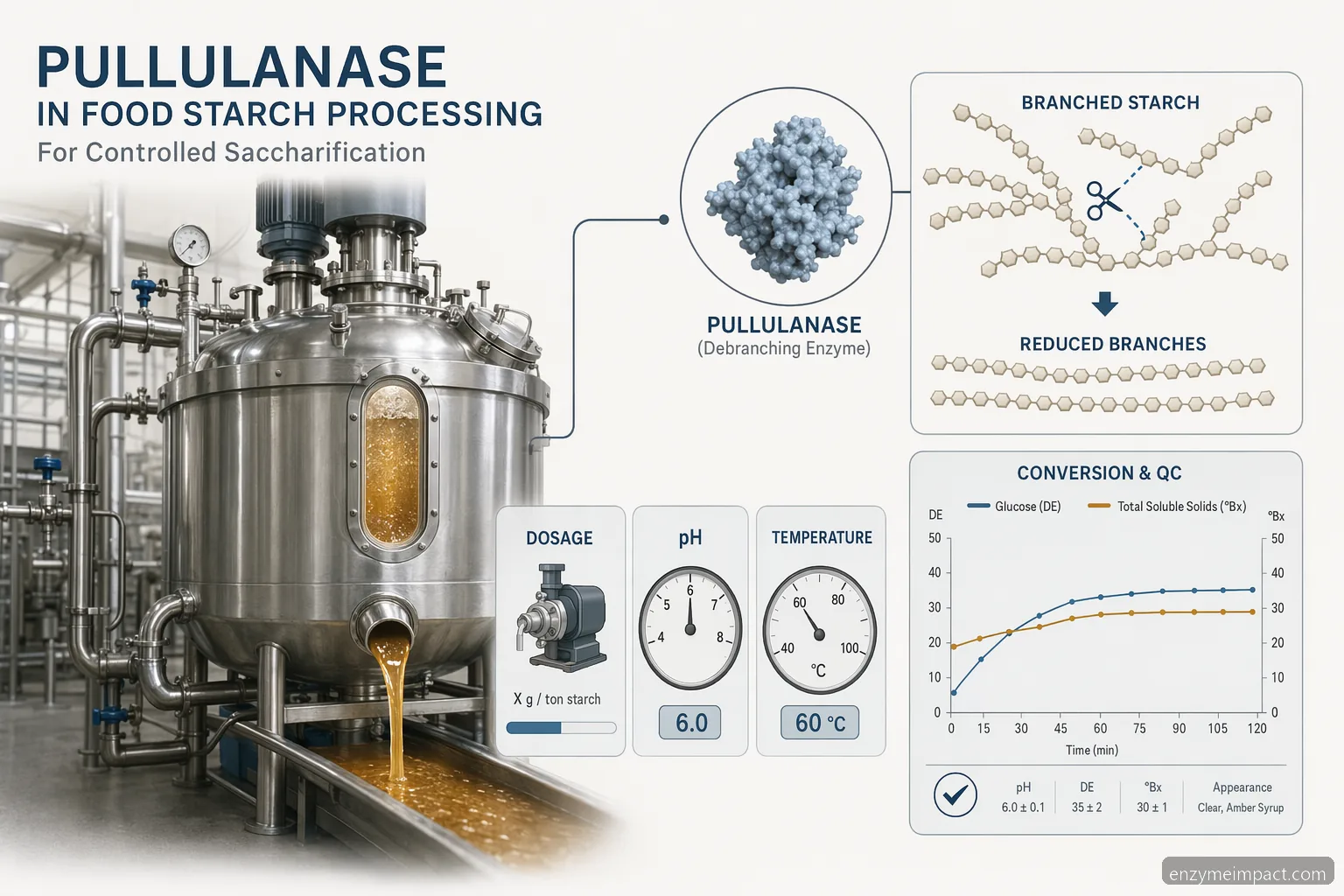
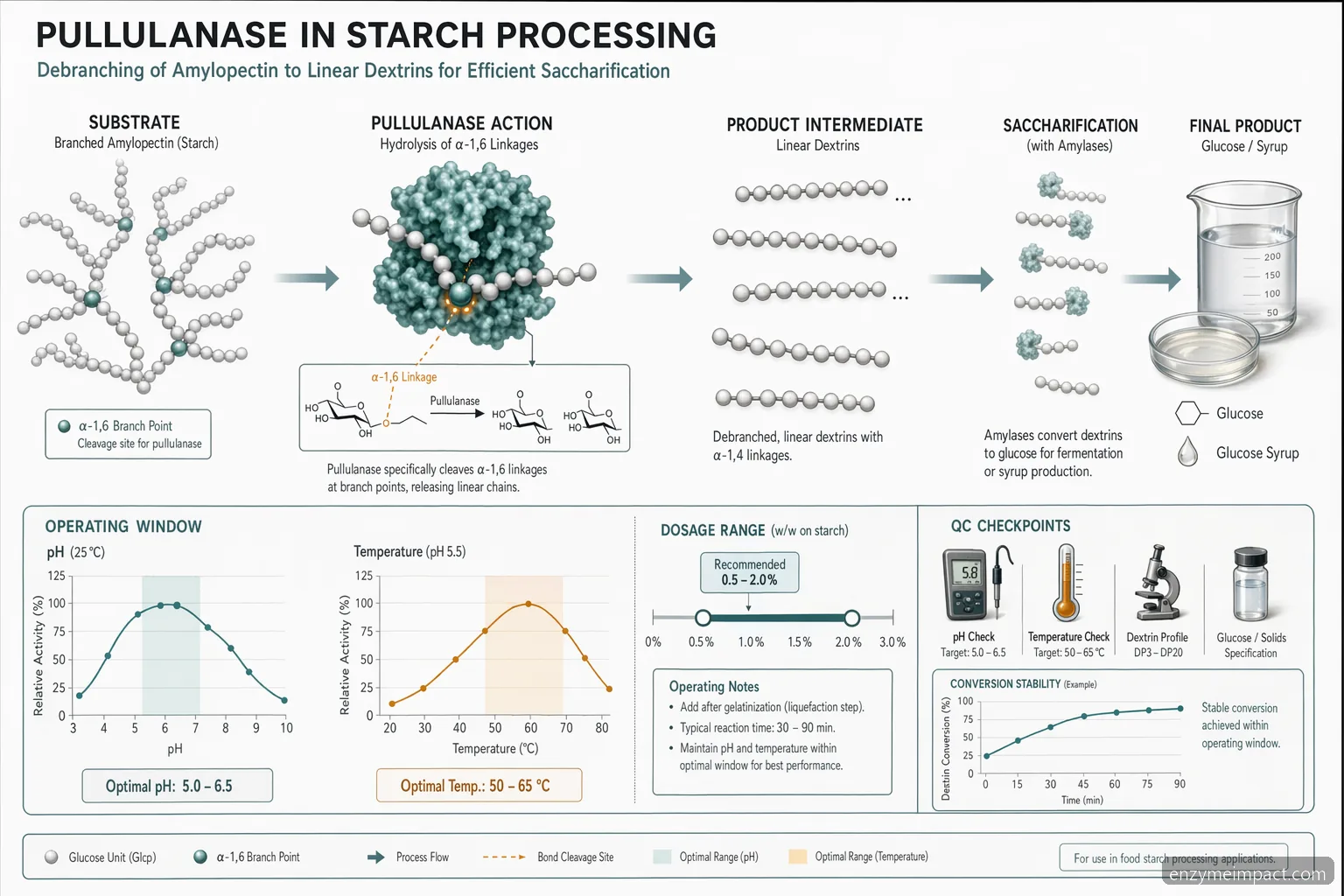
Pullulanase is a starch debranching enzyme that hydrolyzes alpha-1,6 glycosidic linkages in pullulan and branched starch molecules such as amylopectin. In pullulanase food processing applications, it is commonly used after liquefaction, during saccharification, and often alongside glucoamylase. Its main value is not simply faster starch breakdown; it helps reduce branch-point limitations that can leave dextrins under-converted. This can support higher glucose yield, a more predictable DE profile, and improved substrate utilization in syrup production. In brewing or adjunct processing, pullulanase may also help manage fermentability, depending on recipe and mash conditions. The pullulanase enzyme function is highly condition-dependent, so poor performance is usually linked to pH drift, excessive heat exposure, calcium or salt effects, residence time, substrate quality, or under-dosing.
Primary function: starch debranching • Common process point: saccharification after liquefaction • Typical partner enzyme: glucoamylase • Main buyer goal: consistent conversion and cost-in-use
Starting Dosage, pH, and Temperature Ranges
For industrial pullulanase starch processing trials, dosage should be set by enzyme activity units and dry starch solids, not by a generic volume addition. Many plants begin screening within the supplier-recommended range, often equivalent to roughly 0.05-0.30 kg of enzyme product per metric ton of dry starch, then refine based on DE, glucose, residual dextrin, and economics. Some concentrated products may require lower product-weight dosing, while lower-activity liquids may require more. A practical starting pH range is often 4.0-5.5, with saccharification temperatures commonly around 55-65°C for many food-processing systems. Thermostable or acid-tolerant grades may operate differently. Always confirm the actual range in the TDS, because excessive temperature can inactivate pullulanase and excessive pH correction can increase salt load or create downstream quality issues.
Dose on dry starch solids and declared activity • Use the TDS as the control document • Run side-by-side trials with the existing enzyme program • Track performance against syrup specification, not only DE
Troubleshooting Low Conversion or Unstable Results
If pullulanase for starch processing is not delivering the expected conversion, first confirm the enzyme was added at the correct process point. Pullulanase is normally more useful when liquefied starch has been cooled into the saccharification window and pH has been adjusted appropriately. Adding it into a jet-cooking or high-temperature hold step can cause rapid activity loss unless the product is specifically designed for that exposure. Next, check liquefaction quality: poor gelatinization, excessive retrogradation, high viscosity, or incomplete alpha-amylase action can limit debranching efficiency. Also review residence time, dry solids, agitation, and sample timing. A small pH deviation can matter if the process runs near the edge of the enzyme’s activity curve. Finally, confirm storage conditions and shelf life, because heat-damaged or aged enzyme may still look normal but underperform in production.
Check actual slurry pH at process temperature • Verify enzyme addition point and hold time • Compare fresh enzyme with retained production samples • Measure residual dextrins or DP distribution when possible
QC Checks for Pilot and Production Validation
A well-designed pilot validation should compare the current enzyme program against one or more pullulanase dosage levels at identical dry solids, pH, temperature, and residence time. Key QC checks may include DE, glucose or fermentable sugar profile by HPLC, residual oligosaccharides, viscosity, color, filtration behavior, ash contribution from pH adjustment, microbial limits, and final syrup specification. For troubleshooting, collect time-course samples rather than only endpoint samples; this helps distinguish slow kinetics from enzyme inactivation. Plants should also record enzyme lot number, storage temperature, actual dosing pump calibration, slurry dry solids, pH meter calibration, and saccharification tank temperature profile. The best pullulanase enzyme supplier for starch processing should help interpret these data without overclaiming performance before plant-specific validation is complete.
Run blank, current program, and pullulanase trial arms • Use calibrated dosing pumps and pH meters • Retain samples for confirmatory analysis • Evaluate quality and throughput together
Supplier Qualification and Cost-in-Use
Selecting an industrial pullulanase enzyme starch processing supplier should go beyond quoted price per kilogram. Buyers should request a current COA for each batch, TDS for operating guidance, SDS for handling and storage, allergen or food-contact statements where relevant, and documentation of production traceability. The COA should identify activity, appearance, lot number, manufacture or release date, and any agreed microbiological or purity parameters. Cost-in-use should include enzyme dose, yield impact, saccharification time, steam and cooling requirements, pH-adjustment chemicals, filtration performance, rework reduction, and consistency across batches. A lower-priced enzyme can be more expensive if it requires higher dosage or causes variable syrup profiles. Supplier qualification should also include sample availability, technical response time, stability data, packaging suitability, and support for pilot-to-plant scale-up.
Request COA, TDS, and SDS before plant trials • Compare cost per metric ton of dry starch processed • Confirm storage, shelf life, and batch traceability • Prioritize repeatable performance over headline activity alone
Technical Buying Checklist
Buyer Questions
The main pullulanase enzyme function is to cleave alpha-1,6 branch points in amylopectin and related dextrins. This debranching improves access for glucoamylase and can support higher glucose yield or a more controlled saccharide profile. Performance depends on substrate preparation, pH, temperature, residence time, enzyme activity, and compatibility with the rest of the enzyme system.
A practical screening band is often around 0.05-0.30 kg of enzyme product per metric ton of dry starch, but this is only a starting point. Actual dosage depends on declared activity, dry solids, target DE or glucose, residence time, and enzyme stability. Use the supplier TDS and pilot data to optimize cost-in-use before full production.
Common causes include addition at the wrong process step, excessive temperature exposure, pH outside the active range, insufficient saccharification time, poor liquefaction quality, inaccurate dosing, or degraded enzyme from improper storage. Review time-course samples, pH and temperature logs, dry solids, enzyme lot data, and dosing pump calibration before increasing dosage.
Compare suppliers by documented activity, application support, batch consistency, COA quality, TDS clarity, SDS availability, storage stability, traceability, and pilot-scale performance. Do not rely only on price per kilogram. The better comparison is cost-in-use per ton of dry starch at the same syrup specification, yield, residence time, and quality requirements.
Related Search Themes
pullulanase supplier for starch processing, pullulanase for starch processing, pullulanase enzyme supplier for starch processing, pullulanase enzyme for starch processing, industrial pullulanase starch processing, industrial pullulanase enzyme starch processing
Pullulanase (Debranching Enzyme) for Research & Industry
Need Pullulanase (Debranching Enzyme) for your lab or production process?
ISO 9001 certified · Food-grade & research-grade · Ships to 80+ countries
Frequently Asked Questions
What is the main pullulanase enzyme function in starch processing?
The main pullulanase enzyme function is to cleave alpha-1,6 branch points in amylopectin and related dextrins. This debranching improves access for glucoamylase and can support higher glucose yield or a more controlled saccharide profile. Performance depends on substrate preparation, pH, temperature, residence time, enzyme activity, and compatibility with the rest of the enzyme system.
How much pullulanase should be used per ton of dry starch?
A practical screening band is often around 0.05-0.30 kg of enzyme product per metric ton of dry starch, but this is only a starting point. Actual dosage depends on declared activity, dry solids, target DE or glucose, residence time, and enzyme stability. Use the supplier TDS and pilot data to optimize cost-in-use before full production.
Why did pullulanase not improve glucose yield in my trial?
Common causes include addition at the wrong process step, excessive temperature exposure, pH outside the active range, insufficient saccharification time, poor liquefaction quality, inaccurate dosing, or degraded enzyme from improper storage. Review time-course samples, pH and temperature logs, dry solids, enzyme lot data, and dosing pump calibration before increasing dosage.
How should I compare pullulanase suppliers for starch processing?
Compare suppliers by documented activity, application support, batch consistency, COA quality, TDS clarity, SDS availability, storage stability, traceability, and pilot-scale performance. Do not rely only on price per kilogram. The better comparison is cost-in-use per ton of dry starch at the same syrup specification, yield, residence time, and quality requirements.
Related: Pullulanase for Measurable Process Gains
Turn This Guide Into a Supplier Brief Request pullulanase samples, COA/TDS/SDS, and pilot support for your starch processing trial. See our application page for Pullulanase for Measurable Process Gains at /applications/pullulanase-debranching-enzyme/ for specs, MOQ, and a free 50 g sample.
Contact Us to Contribute